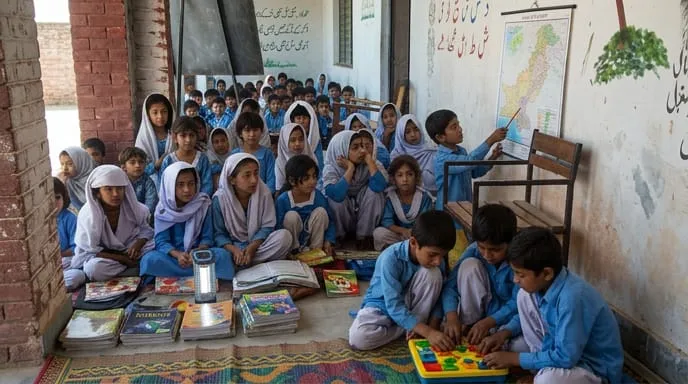
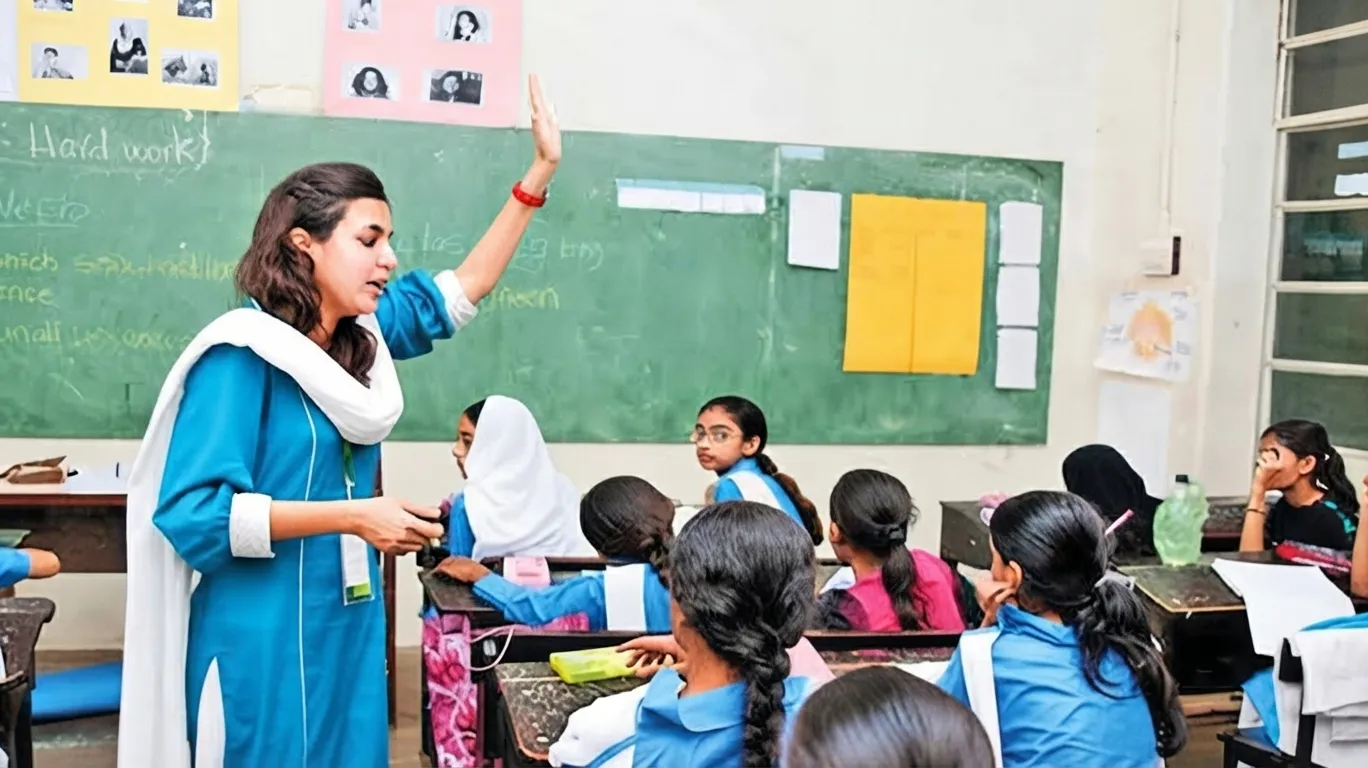
Punjab is preparing to introduce a new approach to primary education with activity-based books for students up to Grade 5 from the 2027 academic session.
The initiative represents a shift away from traditional learning methods that rely heavily on memorisation and aims to make education more practical, creative and engaging for young students.
Under the revised curriculum, work on the new books has already begun.
A Shift From Rote Learning
One of the key objectives of the new approach is to reduce students’ dependence on rote learning.
Traditional classroom methods can often encourage students to memorise information primarily for examinations. Activity-based learning, by contrast, focuses on helping children understand concepts and apply their knowledge.
The proposed books are expected to include activities and practical exercises that allow students to interact with the subjects they are studying.
Learning Through Activities
Activity-based education encourages students to become active participants in the learning process.
Instead of simply reading a concept and memorising its definition, students can explore ideas through classroom activities, examples, problem-solving exercises and practical situations.
This approach can help children develop a deeper understanding of what they learn.
Connecting Classroom Learning With Real Life
The new books will aim to help students connect academic concepts with everyday situations.
For younger learners, relating lessons to real-world examples can make difficult concepts easier to understand.
For example, mathematics can be connected with shopping, measurements and everyday calculations, while science lessons can involve observations of the environment and simple practical activities.
This can make education more meaningful and easier for children to remember.
Focus on Creativity and Practical Skills
The proposed curriculum also places greater emphasis on creativity and practical skills.
Young students can benefit from activities that encourage them to ask questions, experiment, solve problems and develop their own ideas.
Such learning experiences can help build skills that extend beyond examination performance.
Creativity, communication, collaboration and problem-solving are increasingly important skills for students as they progress through their education.
Grades 1 to 5 in Focus
The new activity-based books are planned for students up to Grade 5, covering the early years of formal education.
This stage is particularly important because children develop foundational skills in reading, writing, mathematics, science and social understanding during these years.
Introducing interactive learning methods at an early age could help students develop more positive attitudes toward education.
Revised Curriculum Already Under Development
Work on the new books has reportedly already started under the revised curriculum.
The development process is intended to create educational material that is better aligned with practical learning and the needs of modern students.
The success of the initiative, however, will depend not only on the textbooks but also on how effectively teachers are supported in using activity-based methods in classrooms.
Teachers Will Play a Key Role
Teachers will remain central to the success of any curriculum reform.
Activity-based learning requires educators to move beyond simply delivering information and instead guide students through activities, discussions and practical exercises.
Teacher training and classroom resources will therefore be important factors in ensuring that the new books achieve their intended objectives.
Schools may also need appropriate facilities and teaching materials to conduct activities effectively.
Potential Benefits for Students
A successful shift toward activity-based education could provide several benefits for young learners.
These may include:
- Better understanding of academic concepts
- Greater classroom participation
- Improved problem-solving skills
- More creativity and independent thinking
- Stronger connection between education and everyday life
- Reduced dependence on rote memorisation
- Increased student engagement
The approach could also encourage students to view learning as a process of discovery rather than simply preparation for examinations.
Moving Toward Skill-Based Education
Education systems around the world are increasingly placing emphasis on skills alongside traditional academic knowledge.
Students are expected to develop abilities such as critical thinking, communication, creativity and collaboration.
Punjab’s proposed activity-based books could contribute to this broader shift by introducing these principles at the primary level.
Challenges Ahead
While the proposed reform has the potential to improve classroom learning, implementation will be important.
Schools will need appropriate resources, teachers will need training and students will need sufficient opportunities to participate in activities.
The quality of the new textbooks will also matter. Activities should be designed to support learning objectives rather than simply add entertainment to lessons.
Effective monitoring and feedback could help identify areas that require improvement after the books are introduced.
What the 2027 Change Could Mean
If successfully implemented, the new activity-based books could represent a significant change in how primary students across Punjab experience education.
The focus on practical learning and real-life applications could help children understand why they are learning particular concepts and how those concepts can be used outside the classroom.
For parents and students, the transition may also mean a greater emphasis on understanding and skills rather than memorising textbook material.
Conclusion
Punjab’s planned introduction of activity-based books for Grades 1–5 from the 2027 academic session represents an important step toward modernising primary education.
By focusing on practical activities, creativity, real-life applications and skill development, the initiative aims to make learning more engaging while reducing reliance on rote memorisation.
The effectiveness of the reform will ultimately depend on the quality of the books, teacher training, classroom implementation and continued evaluation.
If these elements come together successfully, the new approach could help create a more interactive and practical learning environment for Punjab’s youngest students.
Disclaimer: This article is for informational purposes only and is based on publicly available reports. Details regarding the curriculum, textbooks, implementation timeline and academic session may be subject to change. The image is AI-generated and for reference only.