
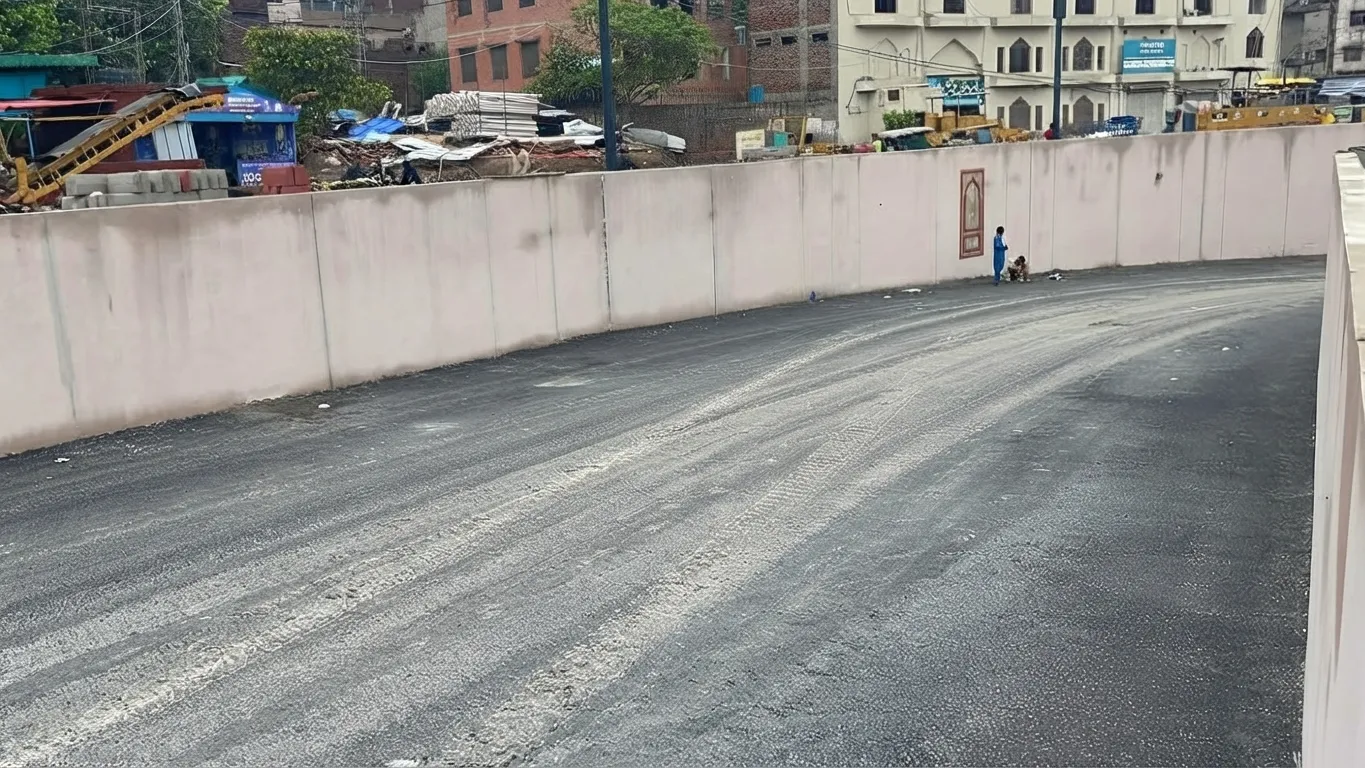
The Punjab Government has completed the Bhati Chowk Underpass in Lahore within just four months, marking a significant addition to the city's transport infrastructure and reflecting the government's focus on accelerating major urban development projects.
What the Project Involves
The Bhati Chowk Underpass has been built specifically to address traffic challenges in what is described as one of Lahore's busiest areas. Underpasses of this kind are typically designed to allow through-traffic to bypass a congested intersection entirely, routing vehicles beneath the surface-level junction rather than requiring them to navigate signal-controlled crossings — a design approach commonly used in dense urban areas to relieve pressure on high-traffic intersections.
A Notably Rapid Timeline
Perhaps the most striking detail of this project is its completion within just four months. Infrastructure projects of this nature — particularly underpasses, which require substantial excavation, structural engineering, and coordination with surrounding traffic and utility networks — often take considerably longer to complete in many urban contexts. A four-month timeline represents a notably accelerated construction schedule for a project of this type.
Expected Benefits for Commuters
The completed underpass is expected to deliver several practical benefits for those travelling through the Bhati Chowk area:
1. Smoother journeys By allowing traffic to bypass the congested surface intersection, the underpass is expected to contribute to more consistent, uninterrupted travel through the area.
2. Minimized travel delays Reducing the need for vehicles to stop at surface-level traffic signals or navigate congested intersection crossings should help cut down on the delays commuters previously experienced passing through Bhati Chowk.
3. Improved connectivity across surrounding roads Beyond the immediate intersection itself, the underpass is expected to improve overall connectivity for the broader network of roads converging at or near Bhati Chowk.
Why Rapid Infrastructure Delivery Matters
1. Reduced disruption during construction A shorter construction timeline generally means a shorter period during which nearby residents, businesses, and commuters must contend with construction-related disruptions, detours, and reduced road capacity — a meaningful benefit in a busy urban area.
2. Faster realization of traffic benefits The sooner a project like this is completed, the sooner commuters and the surrounding area can begin benefiting from the intended improvements in traffic flow and congestion reduction.
3. A demonstration of project execution capability Completing a significant infrastructure project of this nature within four months reflects a level of project management and execution capability that could serve as a reference point for how similar future infrastructure projects might be approached and delivered.
Broader Implications for Lahore's Urban Mobility
This project fits within a broader pattern of urban infrastructure development aimed at addressing traffic congestion in one of Pakistan's largest and most densely populated cities. As Lahore continues to grow, addressing congestion at key intersections and high-traffic corridors remains an ongoing priority for maintaining efficient urban mobility across the city.
The completion of the Bhati Chowk Underpass adds to this broader infrastructure landscape, potentially serving as one component within a larger, ongoing effort to improve traffic flow and connectivity across various parts of the city.
Why This Matters
1. Tangible relief for a high-traffic area For commuters who regularly navigate Bhati Chowk, this project offers a concrete, physical improvement addressing a specific, well-known congestion point within the city.
2. A model for accelerated project delivery The four-month completion timeline stands out as a notable example of accelerated infrastructure delivery, potentially offering lessons or a template for how similar future projects might be planned and executed more efficiently.
3. Contribution to Lahore's broader transportation network Beyond its immediate, localized impact, the underpass contributes to the broader goal of creating a more efficient and accessible transportation network across Lahore as a whole.
4. Signal of continued infrastructure investment The completion of this project reflects continued government investment and attention toward addressing urban infrastructure and mobility challenges within one of Pakistan's major metropolitan areas.
Conclusion
The Punjab Government's completion of the Bhati Chowk Underpass in Lahore within just four months represents a significant and rapidly delivered addition to the city's transport infrastructure. By addressing congestion at one of Lahore's busiest intersections, the project is expected to offer commuters smoother journeys, reduced delays, and improved connectivity — while also reflecting the government's broader focus on accelerating major development projects to enhance urban mobility across the city.
Disclaimer: This content is informational purposes only and based on available reports. The image referenced in the original social media post is AI generated and is just for reference.