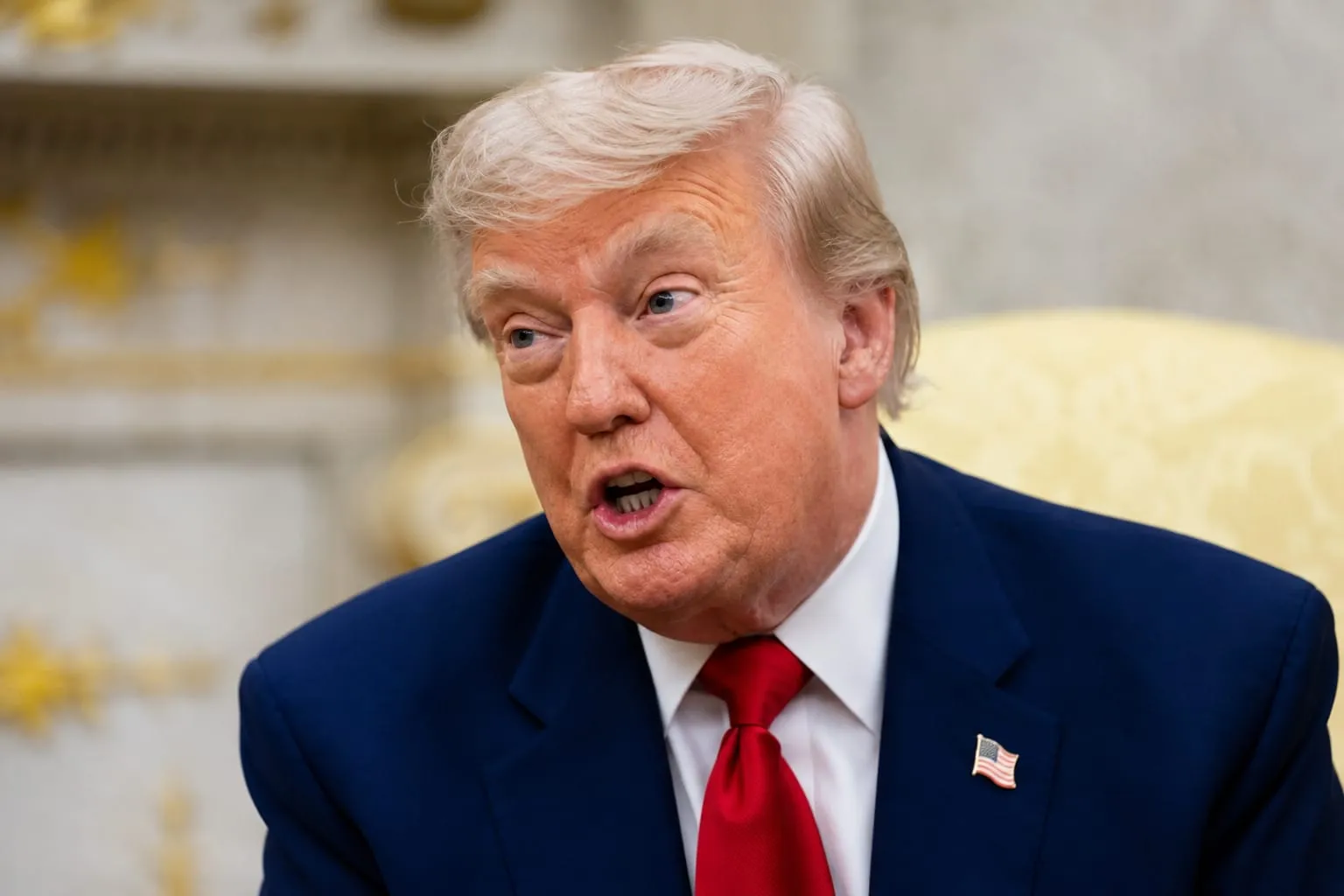
President Donald Trump has sparked international controversy after posting a map on Truth Social labeling the Strait of Hormuz as "New U.S. Territory," renewing his threat to claim sovereignty over the strategically vital waterway just hours after Iran confirmed the route would remain closed following the expiration of a 60-day U.S.-Iran negotiating period without a deal.
The Post
On Tuesday morning, Trump shared a captionless image on his Truth Social account showing the Strait of Hormuz circled on a map and labeled "NEW U.S. Territory." Notably, according to reporting, the circled area on the map extended beyond the strait itself, encompassing portions of Iranian land along the waterway's northern and eastern borders — a detail that would imply, if taken literally, a partial claim over Iranian sovereign territory, not merely the international shipping channel.
This Wasn't the First Time
Trump had floated this idea multiple times in the days leading up to the map post:
- Friday: At a campaign-style event in Garden City, New York, addressing an audience of mostly Nassau County police officers, Trump said in a seemingly joking tone: "And after we finish defeating Iran, which is being very badly defeated—pretty soon I'll be declaring the Hormuz Strait a territory of the United States."
- Monday: Speaking to reporters in the Oval Office, Trump reiterated the idea more directly: "We control it with the blockade, and I like the idea of declaring it a territory," adding, "We have total control over the Strait."
The Context: An Ongoing War and a Missed Deadline
This map controversy did not emerge in isolation. According to reporting, it comes against the backdrop of an active military conflict involving the United States, Israel, and Iran, which began in late February 2026. The Strait of Hormuz — through which roughly one-fifth of the world's oil typically transits — has been effectively shut down by Iran in what has been described as retaliation for the conflict.
The map was posted hours after Iranian officials confirmed the strait would remain closed, following the expiration of a 60-day negotiating period with Washington that failed to produce a deal. According to remarks from Iranian parliamentary speaker Mohammad Bagher Ghalibaf, Iran's conditions for reopening the strait reportedly include the U.S. lifting its ongoing blockade of Iranian ports, releasing frozen Iranian assets, removing oil sanctions, and ending military operations "on all fronts."
Iran's Response
Iranian Deputy Foreign Minister Kazem Gharibabadi responded sharply on X (in a post translated from Persian), dismissing Trump's map as a "delusion" and calling Trump himself a "deluded man," warning that this particular delusion would be "corrected." He further stated:
"The Strait of Hormuz has been Iranian, is Iranian, and will remain Iranian. This strait will only be opened and closed under Iran's command, and as long as you do not accept the reality of defeat and stop indulging in delusions, Iran will continue to enforce the blockade."
Trump's Follow-Up Claims
Approximately two hours after the initial map post, Trump published a follow-up statement on Truth Social offering a notably different characterization of the situation:
"There are no talks or conversations going on, or scheduled, with the Islamic Republic of Iran. The Naval Blockade remains in full force and effect. The Hormuz Strait is open and operating. All water mines have been removed or detonated."
This claim stands in tension with independent reporting, which indicates that traffic through the strait remains at a crawl, and that U.S. forces have been unable to guarantee safe passage for ships attempting to transit the waterway. The strait reportedly remains a dangerous zone for tankers, with Iranian mines and drone attacks continuing to pose a threat to vessels that stray from one of two officially approved transit routes.
Why the Strait of Hormuz Matters So Much
The Strait of Hormuz is one of the world's most critical maritime chokepoints, situated between Iran and portions of Oman and the United Arab Emirates. With roughly 20% of global oil supply typically passing through it, disruptions to the strait carry significant implications for global oil prices and energy markets — a factor reportedly driving the White House's urgency, given the political and economic pressure of elevated gas prices on American consumers.
Why This Story Matters
1. A legally and diplomatically extraordinary claim Declaring a body of water located within another sovereign nation's territorial waters as "U.S. territory" represents an extraordinary assertion with no clear basis in international maritime law, making the claim itself a significant point of controversy independent of its practical feasibility.
2. Conflicting accounts of the situation on the ground The contrast between Trump's claim that the strait is "open and operating" and independent reporting describing continued danger, mines, and crawling traffic highlights a notable gap between official statements and the situation as reported by outside observers.
3. High economic stakes tied to global oil supply Given the strait's role in global oil transit, continued closure or instability in the region carries direct implications for global energy markets, oil prices, and broader economic conditions worldwide.
4. A shifting rationale for the conflict According to reporting, the stated goal of U.S. military action in the region has apparently shifted over time — from an original focus on ending Iran's nuclear program and securing enriched nuclear material, toward what is now increasingly framed around reopening the strait and easing gas prices for American consumers.
5. Uncertain diplomatic path forward With Trump confirming there are no official talks currently scheduled with Iran — though acknowledging a backchannel with Iranian officials does exist — the path toward de-escalation or a formal resolution remains unclear.
Conclusion
Trump's Truth Social map labeling the Strait of Hormuz as "New U.S. Territory" has ignited sharp international controversy, coming at a tense moment following the expiration of a 60-day U.S.-Iran negotiating deadline and amid an ongoing regional conflict. With Iran firmly rejecting the claim as a "delusion" and independent reporting casting doubt on Trump's subsequent assertion that the strait is fully "open and operating," the episode underscores both the high stakes tied to this critical global oil chokepoint and the significant gap between official statements and conditions on the ground.
Disclaimer: This post is for informational purposes only and is based on publicly available reports. The image referenced in the original social media post is AI generated and is for reference only. This article presents statements from all parties as reported and does not endorse any political position.