Samsung Electronics has officially established a new robotics division named RX (Robotics eXperience), marking a significant step in the company's long-term strategy to position robotics as one of its core growth businesses.
The new division will focus on robotics research, product development, commercialization, and artificial intelligence integration, reinforcing Samsung's commitment to becoming a global leader in intelligent automation and next-generation robotics.
The announcement reflects the growing importance of robotics across industries as companies increasingly invest in AI-powered machines capable of performing complex physical tasks.
Samsung's New Robotics Strategy
The newly created RX (Robotics eXperience) division will oversee Samsung's robotics initiatives under centralized leadership.
Its primary objectives include:
- Developing advanced robotic technologies
- Accelerating commercial robotics products
- Integrating artificial intelligence into physical systems
- Expanding Samsung's robotics ecosystem
- Supporting long-term innovation through research and global collaboration
Samsung views robotics as one of the most promising future industries alongside semiconductors, artificial intelligence, and advanced electronics.
Initial Focus on Humanoid Robots
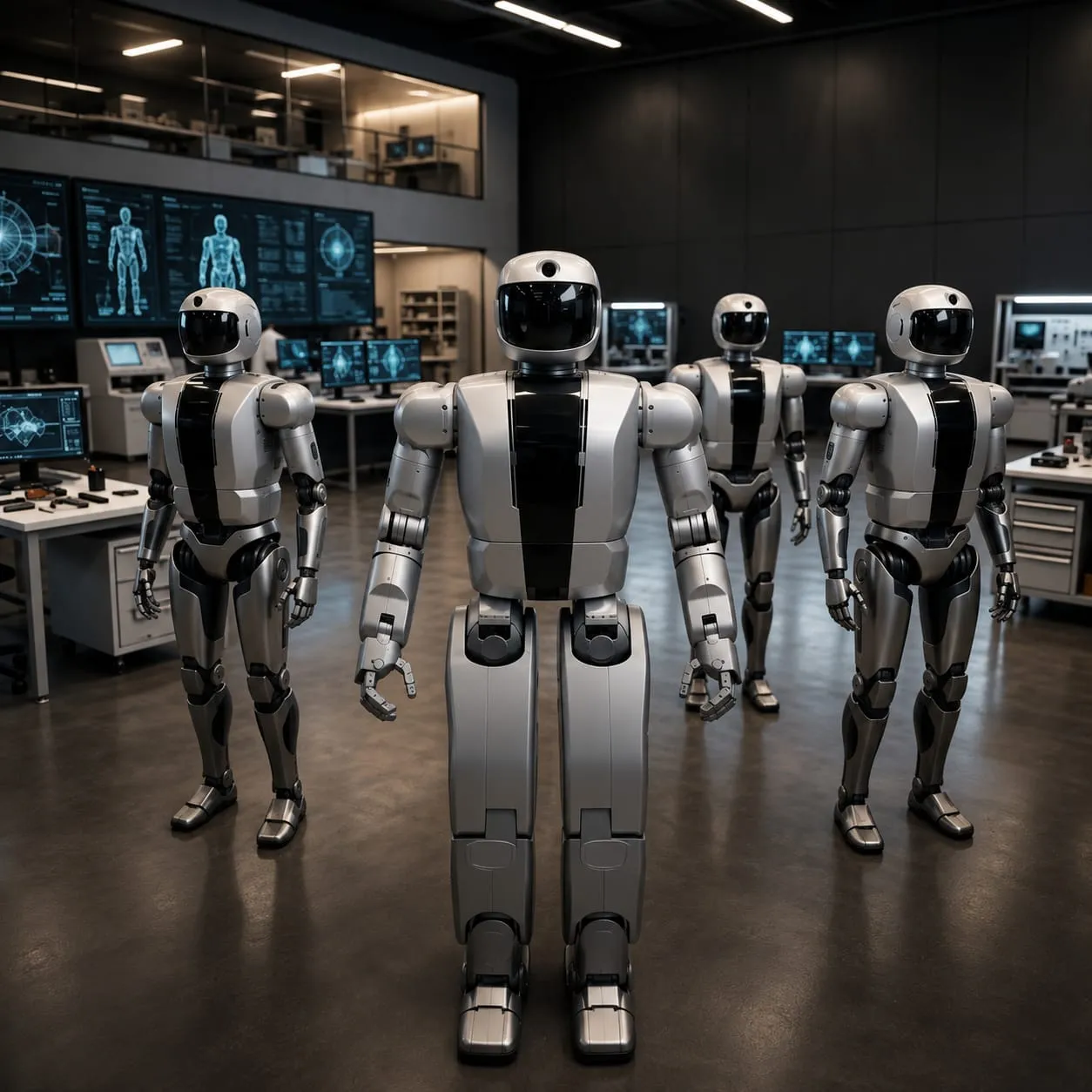
Samsung plans to prioritize the development of humanoid robots for manufacturing environments.
Humanoid robots are designed to perform tasks in workspaces originally built for humans, making them particularly valuable in factories and industrial settings.
Potential applications include:
- Assembly line operations
- Material handling
- Quality inspections
- Warehouse logistics
- Repetitive industrial tasks
- Workplace assistance
Manufacturing is expected to serve as the initial testing ground before broader commercial deployment.
Future Expansion into Homes and Retail
Following industrial adoption, Samsung intends to expand its robotics portfolio into consumer and commercial markets.
Possible future applications include:
Home Robotics
- Household assistance
- Smart home integration
- Elderly care support
- Personal AI assistants
- Cleaning and maintenance
Retail Robotics
- Customer service
- Inventory management
- Product guidance
- Automated checkout support
- In-store logistics
These areas represent rapidly growing opportunities as businesses continue adopting automation to improve efficiency and customer experience.
Building Physical AI Through Research
Samsung also announced plans to strengthen robotics research through:
- Global robotics research hubs
- A dedicated robotics data factory
- Advanced AI model development
- Real-world robotic training systems
These investments aim to accelerate the development of Physical AI, a field focused on enabling robots to perceive, understand, and interact safely with the physical world.
Unlike traditional software AI, Physical AI combines sensors, robotics, machine learning, and real-time decision-making to perform practical tasks in dynamic environments.
Leveraging Samsung's Existing Strengths
Samsung enters the robotics race with several competitive advantages.
The company already possesses expertise in:
- Semiconductor manufacturing
- AI processors
- Advanced sensors
- Cameras and imaging technology
- Consumer electronics
- Display technology
- Battery systems
- Precision manufacturing
These capabilities allow Samsung to develop both the hardware and software required for sophisticated robotic systems.
Growing Global Robotics Market
The robotics industry is experiencing rapid global expansion as organizations increasingly invest in automation to address labor shortages, improve productivity, and enhance operational efficiency.
Demand is growing across sectors including:
- Manufacturing
- Healthcare
- Logistics
- Agriculture
- Retail
- Hospitality
- Smart homes
- Warehousing
Major technology companies around the world are accelerating investments in robotics, making the sector one of the fastest-growing areas within the broader AI industry.
Looking Ahead
Samsung's creation of the RX division demonstrates the company's long-term commitment to robotics and intelligent automation. By combining its expertise in semiconductors, sensors, artificial intelligence, and manufacturing with dedicated robotics research, Samsung aims to establish itself as a leading player in the evolving global robotics market.
As AI continues moving beyond software into physical machines, robotics is expected to become one of the defining technologies of the coming decade, transforming industries as well as everyday life.
Disclaimer: This article is for informational purposes only and is based on publicly available reports. Product plans, commercialization timelines, and future developments may change as Samsung continues to advance its robotics strategy.