The federal government is planning to establish a 400-acre Garments City at Port Qasim, Karachi, in a major initiative aimed at boosting Pakistan's textile industry, exports, investment, and employment.
Overview of the Project
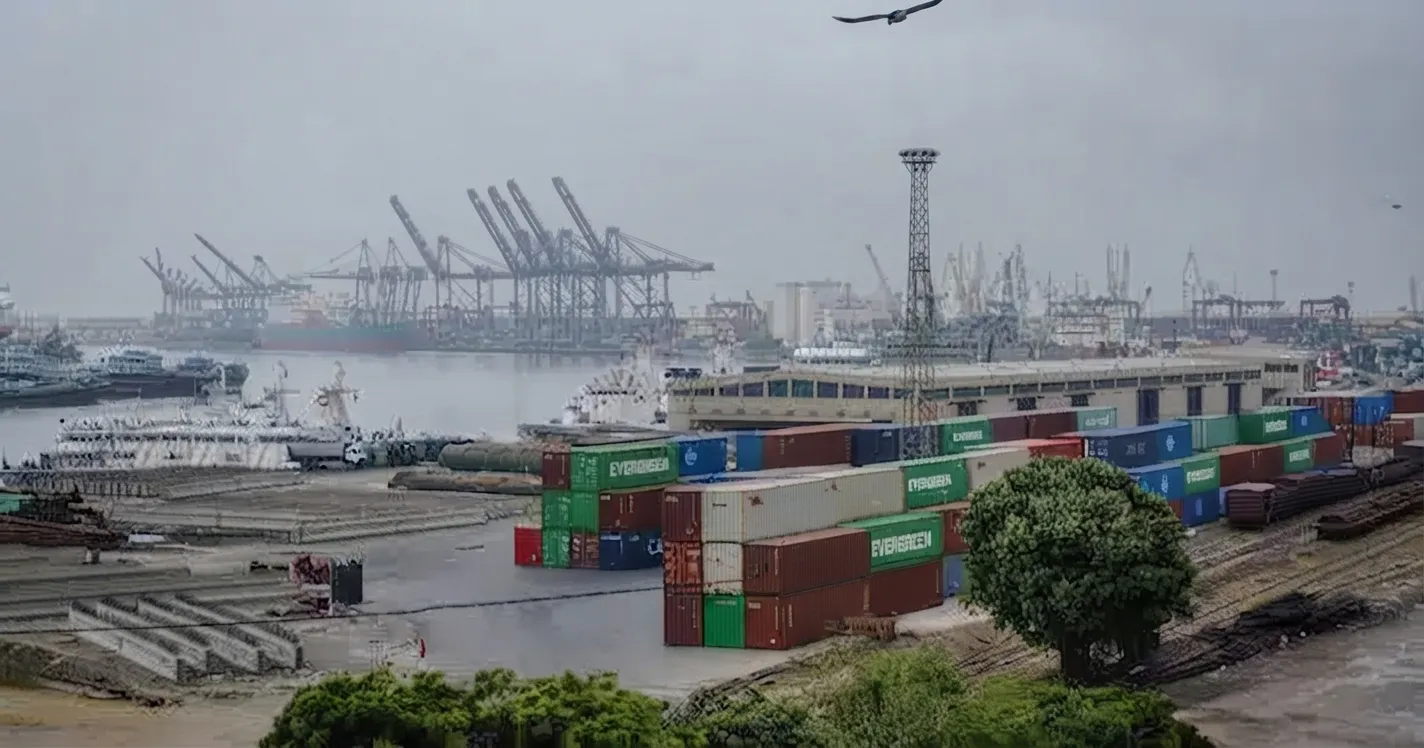
The proposed Garments City would be developed on a substantial 400-acre site at Port Qasim, positioning it within one of Pakistan's key port and industrial hubs. The project was discussed at a meeting chaired by Federal Minister for Maritime Affairs Junaid Anwar Chaudhry, with 250 acres expected to be developed during the first phase — indicating a phased development approach rather than a single, all-at-once rollout.
Projected Economic Impact
According to the figures discussed, the Garments City carries significant projected economic potential:
- Approximately 138,000 jobs expected to be created
- Up to $2.5 billion in potential revenue generation
These figures, if realized, would represent a substantial contribution to both employment and export revenue within Pakistan's broader textile sector — one of the country's most significant industries in terms of both economic output and workforce size.
How the Project Will Be Structured
1. Priority on private-sector investment The initiative is designed to prioritise private-sector investment, suggesting that the government's role will center on enabling and facilitating investment from private textile and garment manufacturers, rather than the project being primarily state-funded or state-operated.
2. One-window facilities for exporters Exporters operating within the Garments City are expected to benefit from one-window facilities — a business facilitation model designed to simplify and streamline regulatory, licensing, and administrative processes that exporters would otherwise need to navigate through multiple separate channels.
3. Infrastructure support from Port Qasim Authority The Port Qasim Authority will be responsible for providing essential infrastructure to support the development, leveraging the port's existing logistical and infrastructural capacity as a foundation for the new industrial zone.
4. Environmentally friendly technologies The project also plans to incorporate environmentally friendly technologies, reflecting a design consideration toward more sustainable industrial and manufacturing practices as part of the Garments City's development.
Why Location at Port Qasim Matters
Situating the Garments City at Port Qasim carries particular strategic significance for an export-oriented textile and garment manufacturing hub:
- Direct port access can significantly streamline the logistics of exporting finished garments internationally, reducing transportation time and costs between manufacturing and shipping
- Existing industrial infrastructure in the surrounding Port Qasim area may provide a supportive ecosystem for the new development
- Proximity to Karachi, Pakistan's largest city and commercial hub, offers access to a substantial labour market and existing supply chain networks relevant to textile manufacturing
Why This Initiative Matters
1. Strengthening value-added textile manufacturing The project is specifically aimed at strengthening Pakistan's value-added textile manufacturing capacity — moving beyond raw or semi-processed textile exports toward higher-value finished garment production, which typically commands better export pricing and economic returns.
2. Significant employment potential With a projected 138,000 jobs, the initiative could make a meaningful contribution to employment generation, particularly relevant given Pakistan's large and growing workforce in need of formal employment opportunities.
3. Boosting export revenue and foreign exchange earnings The projected $2.5 billion in potential revenue would represent a significant contribution to Pakistan's export earnings, an important consideration given the country's ongoing focus on strengthening foreign exchange inflows.
4. A model for facilitated private investment The emphasis on private-sector investment, combined with one-window facilitation for exporters, reflects an approach aimed at reducing bureaucratic friction — a factor that has historically been cited as a challenge for businesses operating in Pakistan.
Important Caveats
As explicitly noted in the disclaimer accompanying this announcement, project figures, timelines, and expected outcomes may change as the initiative moves from planning toward implementation. Large-scale infrastructure and industrial projects of this nature often experience adjustments to their original projections based on evolving economic conditions, investment uptake, and implementation realities. The 138,000-job and $2.5 billion figures should therefore be understood as projections tied to the project's current planning stage, rather than guaranteed outcomes.
What to Watch For
As this project moves forward, several factors will likely shape its ultimate success and impact:
- The pace and scale of private-sector investment uptake, particularly during the first 250-acre phase
- The effectiveness of the one-window facilitation system in genuinely simplifying processes for exporters
- Progress on infrastructure development by the Port Qasim Authority
- Whether the projected job creation and revenue figures are met, exceeded, or revised as the project develops
Conclusion
Pakistan's planned 400-acre Garments City at Port Qasim represents an ambitious initiative aimed at strengthening the country's value-added textile export capacity, with the potential to generate significant employment and export revenue. With a phased development approach beginning with 250 acres, a focus on private-sector investment, and infrastructure support from the Port Qasim Authority, the project's ultimate success will depend on effective implementation in the period ahead — with the government itself cautioning that current figures and timelines remain subject to change.
Disclaimer: This content is for informational purposes only and is based on available reports. Project figures, timelines and expected outcomes may change. The image referenced in the original social media post is AI-generated and is for reference only.