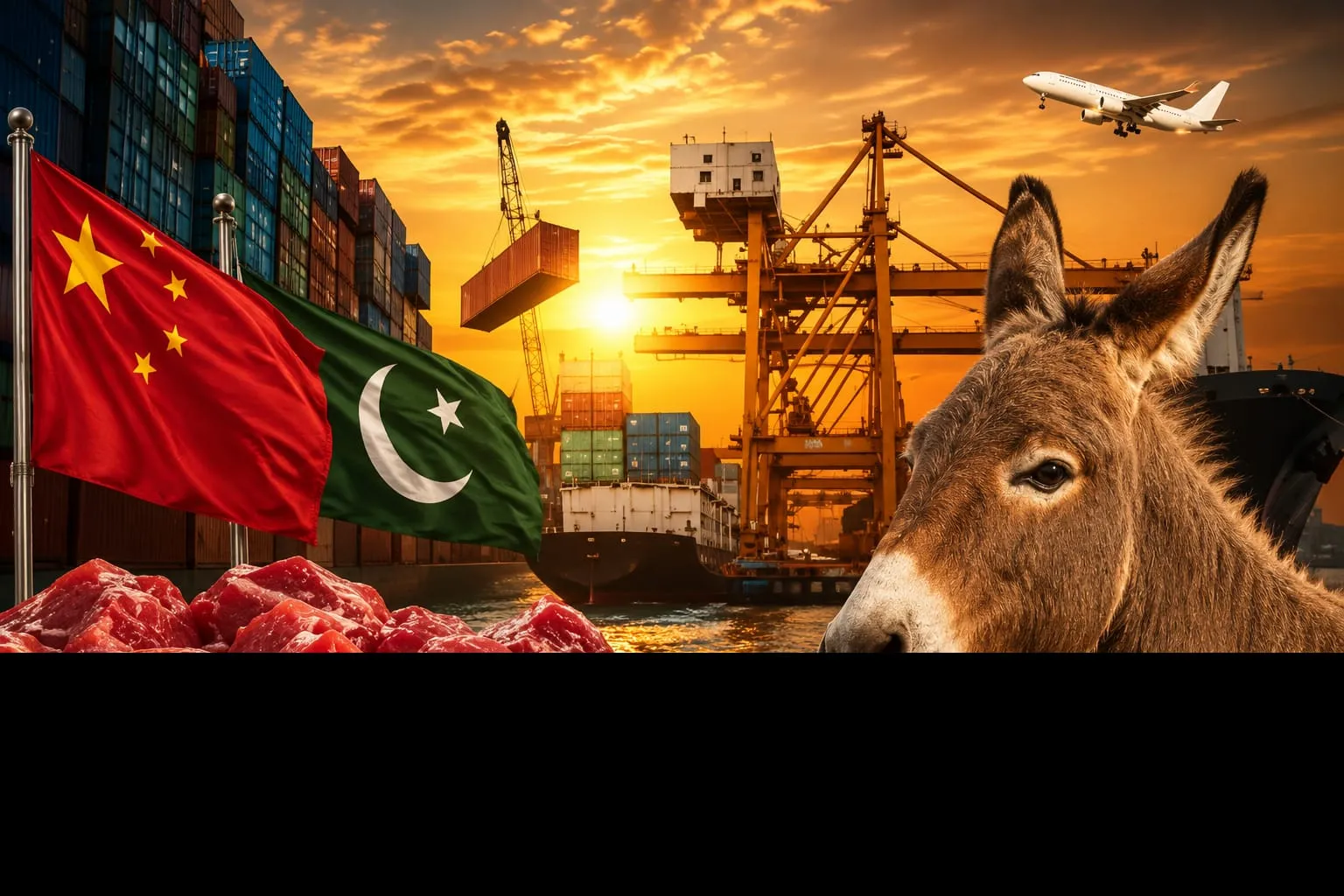
A Pak-Sino joint venture has secured four acres of land in Gwadar's North Free Zone to establish a donkey slaughterhouse and processing factory, aimed at exporting donkey meat and hides to China as part of a broader effort to strengthen Pakistan-China trade ties.
Project Details
According to available reports, the joint venture has made significant progress toward establishing this facility:
- Location: Four acres secured within Gwadar's North Free Zone
- Initial soil testing: Already completed as part of the site preparation process
- Processing quota: The company has received a quota to process 150,000 donkeys annually
- Regulatory approvals: Required licences and no-objection certificates (NOCs) have already been obtained
This combination of completed soil testing, secured licensing, and an established processing quota suggests the project has moved beyond early planning stages and into active preparation for facility development.
What the Facility Will Produce
The planned facility is designed to process donkeys for two primary export products:
1. Donkey meat Intended for export to China, where donkey meat is consumed as part of certain regional culinary traditions.
2. Donkey hides A particularly significant product in this context, as donkey hides are the primary source of ejiao, a traditional Chinese gelatin product derived from donkey-hide collagen, widely used in traditional Chinese medicine and increasingly in health and beauty products. Rising demand for ejiao in China has been a significant driver of global interest in donkey hide sourcing and trade in recent years.
The Role of Gwadar's North Free Zone
The choice of Gwadar's North Free Zone as the project's location is notable, given the zone's role within Pakistan's broader economic development strategy, particularly in connection with the China-Pakistan Economic Corridor (CPEC). Free zones like this one are typically designed to attract foreign and joint-venture investment by offering specific regulatory, tax, and logistical advantages, making them an attractive base for export-oriented industrial projects like this one.
Connecting with Local Farmers
A key element of the project's stated strategy involves working with local donkey farmers in Sindh and Punjab. This aspect of the plan suggests an effort to build a structured supply chain connecting local livestock farmers directly to the processing facility, potentially creating new economic opportunities for farmers in these provinces who raise donkeys as part of their livestock operations.
Why This Project Matters
1. Strengthening Pakistan-China trade ties This project is explicitly framed as part of a broader effort to strengthen Pakistan-China trade, reflecting the ongoing economic relationship between the two countries and adding a new, specific sector to their bilateral trade activities.
2. Developing Pakistan's livestock value chain Beyond the trade dimension, the project is also positioned as a contribution to developing Pakistan's livestock value chain more broadly — potentially creating new economic value and market opportunities around donkey farming, an area of livestock production that has historically received less commercial attention compared to more traditional livestock sectors like cattle or poultry.
3. Tapping into growing Chinese demand for donkey products China's demand for donkey hides, driven significantly by the ejiao industry, has led to notable global interest in donkey product sourcing in recent years, with various countries exploring donkey farming and export opportunities to meet this demand. This project positions Pakistan to potentially participate in this broader global trend.
4. Economic opportunities for local farmers By planning to work directly with donkey farmers in Sindh and Punjab, the project could create new income opportunities for farmers in these regions, provided the supply chain and pricing arrangements prove economically beneficial for local producers.
Broader Context: Global Donkey Trade Dynamics
It's worth noting that the global donkey trade — driven substantially by Chinese demand for donkey hides used in ejiao production — has been a subject of considerable international discussion in recent years, including from animal welfare organizations that have raised concerns about the sustainability and welfare implications of large-scale donkey slaughter operations in various countries. As this Gwadar project moves forward, questions around animal welfare standards, sustainable sourcing practices, and the long-term impact on local donkey populations may become relevant considerations as the facility scales toward its stated 150,000-donkey annual processing quota.
What Comes Next
With soil testing completed, licences and NOCs secured, and a defined processing quota in place, the next phases of this project will likely involve actual facility construction, further development of the supply chain with local farmers in Sindh and Punjab, and eventual commencement of processing and export operations.
Conclusion
The Pak-Sino joint venture's donkey processing facility in Gwadar's North Free Zone represents a notable and distinctive addition to Pakistan-China trade cooperation, tapping into China's demand for donkey meat and hides while aiming to develop new economic opportunities within Pakistan's livestock sector. With regulatory approvals already secured and plans to engage local farmers in Sindh and Punjab, the project reflects a specific and structured approach to entering this niche but economically significant export market.
Disclaimer: This post is for informational purposes only and is based on publicly available reports. The image referenced in the original social media post is AI generated and is for reference only.