
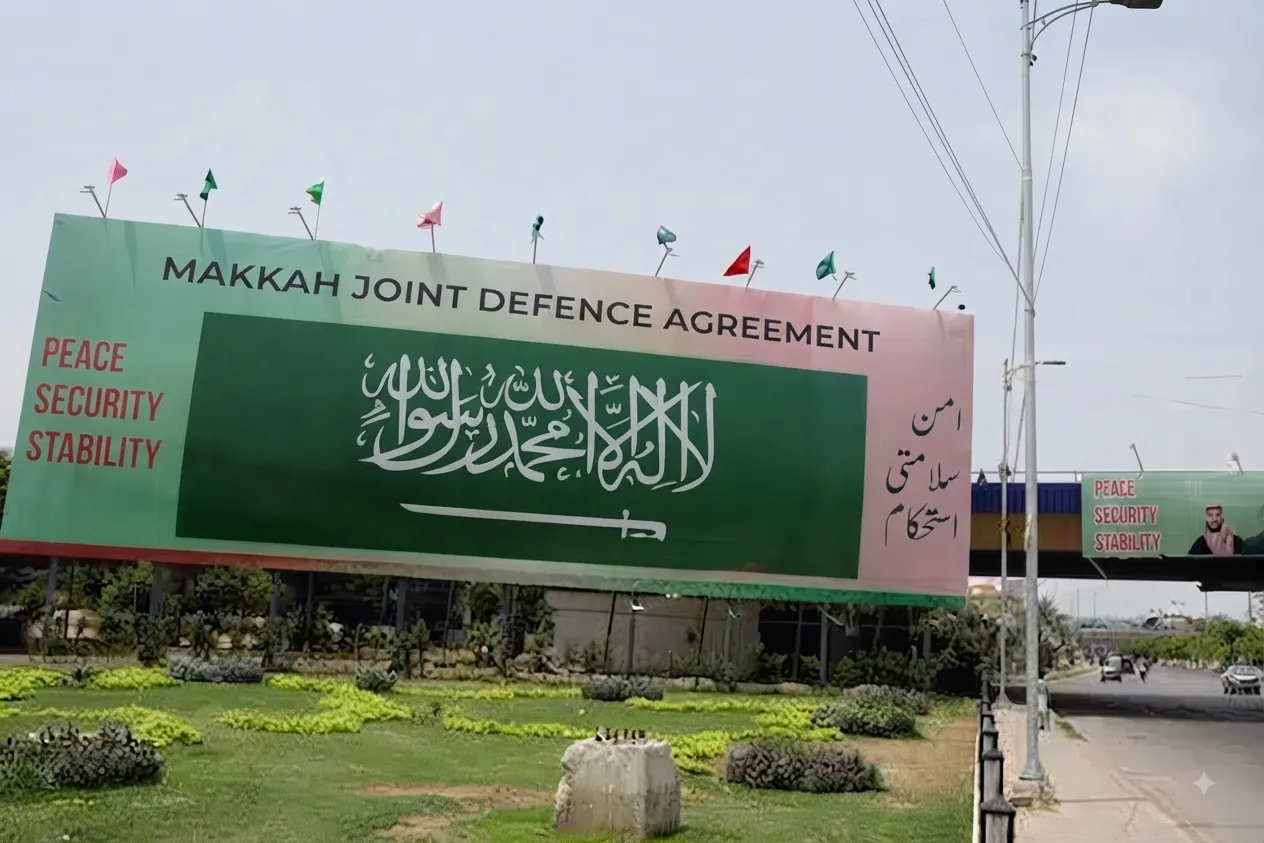
Pakistan’s Deputy Prime Minister and Foreign Minister Ishaq Dar has reiterated that the Makkah Joint Defence Agreement between Pakistan, Saudi Arabia and Türkiye is defensive in nature and is not directed against any particular country.
The statement comes amid growing attention to the emerging strategic cooperation between the three countries and the potential implications of their new defence partnership for regional security.
What Is the Makkah Joint Defence Agreement?
The agreement brings Pakistan, Saudi Arabia and Türkiye closer together on matters related to defence and strategic security. According to Ishaq Dar, the pact is intended to strengthen cooperation among the three countries while supporting their shared interests in sovereignty, security and regional stability.
A key element of the agreement is its collective-security provision. Under the pact, an armed attack against any one of the three participating countries would be treated as an attack against all three.
This provision is designed to strengthen collective deterrence and create a stronger framework for responding to external aggression.
Ishaq Dar Emphasizes Defensive Purpose
Ishaq Dar has stressed that the agreement should not be viewed as an instrument of confrontation. Instead, he described it as a defensive arrangement focused on protecting the sovereignty and security of the participating states.
The clarification is significant because new military and defence partnerships can attract international attention, particularly when they involve countries with important strategic positions in the Middle East and South Asia.
By emphasizing the defensive nature of the agreement, Pakistan has sought to underline that the partnership is intended to support security and stability rather than target another state.
Focus on Collective Deterrence
One of the major objectives highlighted by Dar is collective deterrence.
Collective defence arrangements are generally designed to make potential aggression more difficult by demonstrating that an attack on one partner could trigger a coordinated response from other members.
For Pakistan, Saudi Arabia and Türkiye, closer defence cooperation could provide opportunities for greater coordination, information sharing and strategic engagement.
The agreement also reflects the broader trend of the three countries strengthening their bilateral and multilateral relationships in defence and security.
Regional Security and Stability
The pact comes at a time when regional security remains a major concern across the Middle East and South Asia.
Pakistan maintains longstanding relations with both Saudi Arabia and Türkiye, while all three countries have expressed interest in strengthening cooperation across different sectors.
The defence agreement adds another layer to these relationships by creating a framework for closer strategic coordination.
Dar has emphasized that the broader objective is connected to peace, security, stability and mutual cooperation in the region.
What Could the Agreement Mean for Pakistan?
For Pakistan, stronger defence cooperation with Saudi Arabia and Türkiye could have strategic and institutional significance.
Closer coordination could potentially support joint defence initiatives, military cooperation and broader strategic dialogue. It may also contribute to greater coordination between the three countries on regional security issues.
The agreement could further strengthen Pakistan’s strategic relationships with two important partners and provide a platform for expanded cooperation in the future.
Implications for Saudi Arabia and Türkiye
Saudi Arabia and Türkiye also have important strategic interests in strengthening security partnerships.
For Saudi Arabia, regional security and protection of national sovereignty remain major priorities. Türkiye, meanwhile, has significant defence capabilities and an expanding defence industry, making its involvement potentially important for future cooperation.
Pakistan also possesses an established defence industry and significant military experience. Increased cooperation among the three countries could therefore create opportunities for knowledge sharing and defence-sector collaboration.
A Partnership Framed Around Peace
Despite the strategic significance of the agreement, Pakistan’s leadership has repeatedly emphasized that the pact is not intended to create confrontation with another country.
Ishaq Dar’s latest comments reinforce this position, presenting the agreement as a mechanism for strengthening deterrence and protecting participating states rather than escalating tensions.
The distinction between deterrence and confrontation is important when assessing the future role of the partnership. Its effectiveness will ultimately depend on how the three countries implement the agreement and coordinate their policies.
Looking Ahead
The Makkah Joint Defence Agreement represents a significant development in the strategic relationship between Pakistan, Saudi Arabia and Türkiye.
Its collective-security provision, combined with the emphasis on sovereignty and regional stability, could provide a foundation for deeper defence cooperation among the three countries.
At the same time, the agreement’s future impact will depend on practical implementation, continued diplomatic coordination and the evolving security environment in the region.
For now, Pakistan’s position remains clear: according to Ishaq Dar, the Makkah Defence Agreement is defensive in nature, focused on collective deterrence and designed to support peace, security and stability.
Disclaimer: This article is for informational purposes only and is based on publicly available reports. It does not represent an independent assessment of the agreement or its future implications. The image used with this article is AI-generated and is for reference only.