
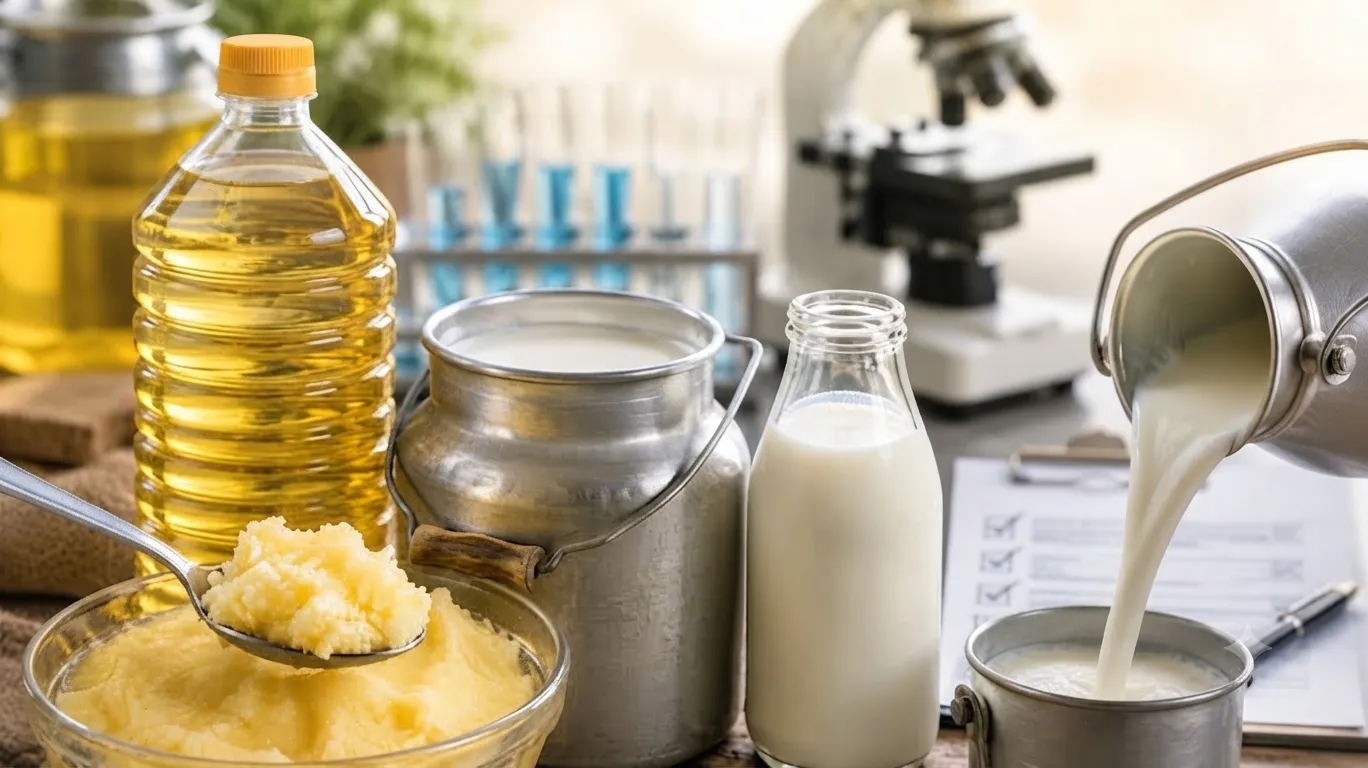
Around 36% of packaged ghee, cooking oil and milk samples tested across Pakistan reportedly failed to meet national quality standards, according to findings presented by the Ministry of Planning.
The reported results have raised concerns about food safety, product quality and consumer protection, particularly because ghee, cooking oil and milk are among the most commonly used food products in Pakistani households.
Food Quality Testing Raises Concerns
Quality testing plays an important role in protecting consumers from products that may not meet established safety and quality requirements. The reported failure rate of around 36% indicates that a significant proportion of the tested samples did not comply with the applicable national standards.
The findings have renewed attention on the need for stronger monitoring of packaged food products and more consistent enforcement of food quality regulations.
While the results relate to the samples that were tested, they do not necessarily mean that all packaged ghee, cooking oil or milk products available in the Pakistani market are unsafe. Consumers should therefore avoid generalizing the findings to every brand or product without verified testing information.
Why Ghee and Cooking Oil Quality Matters
Ghee and cooking oil are essential components of everyday cooking in Pakistan. Their quality can directly affect household food choices and consumer confidence.
Quality testing can help identify products that fail to meet required standards related to composition, purity, labeling and other regulated characteristics.
Strong monitoring of edible oils and fats is particularly important because these products are consumed frequently across a wide range of households.
Milk Quality Remains an Important Public Health Issue
Milk is another major part of the Pakistani diet, making quality control particularly important.
Testing helps authorities determine whether milk products meet required standards and whether their composition and quality are consistent with regulatory requirements.
The reported findings underline the importance of maintaining effective testing systems throughout the supply chain, from production and processing to distribution and retail.
Need for Stronger Food Safety Monitoring
The reported results highlight the importance of strengthening Pakistan's food safety and quality-control mechanisms.
Regular inspections and laboratory testing can help regulators identify non-compliant products before they reach a wider consumer market. Effective enforcement can also encourage manufacturers and suppliers to maintain consistent production standards.
A strong food safety system requires cooperation among government regulators, laboratories, manufacturers, retailers and consumers.
Role of Regulatory Authorities
Organizations responsible for food standards and consumer protection have an important role in ensuring that products available in the market comply with established requirements.
Regulatory bodies can support food safety by conducting regular sampling, laboratory analysis, inspections and enforcement actions where violations are confirmed.
Authorities may also need to improve coordination between national and provincial institutions to create a more consistent approach to food quality monitoring across Pakistan.
What Consumers Can Do
Consumers can take several practical steps to make more informed food choices.
Checking product labels, manufacturing and expiry dates, packaging condition and regulatory information can help reduce the risk of purchasing questionable products.
Consumers should also be cautious about products with damaged packaging, unclear labeling or unusually low prices. Where official complaint mechanisms are available, suspected food-quality issues should be reported to the relevant authorities.
However, consumers should also avoid making claims about specific brands or products without verified evidence.
Importance of Transparent Testing
Transparent publication of food-testing results can help strengthen public confidence in Pakistan's food safety system.
When authorities communicate testing methodologies, sample sizes, locations and relevant quality parameters clearly, consumers and businesses can better understand what the findings actually represent.
This is particularly important when a reported percentage is used to describe failed samples, because the figure applies to the tested sample set rather than automatically representing the entire national market.
Impact on Food Businesses
The findings could also encourage food manufacturers and suppliers to review their quality-control systems.
Companies operating in the packaged food sector may need to strengthen internal testing, improve sourcing practices and ensure compliance with applicable national standards.
Consistent compliance can benefit businesses by improving consumer trust and reducing the risk of regulatory action, product recalls or reputational damage.
A Broader Challenge for Pakistan's Food Industry
Food safety remains an important issue for Pakistan as the country's population, urban markets and packaged-food industry continue to grow.
As more consumers depend on packaged products, maintaining reliable quality standards becomes increasingly important. Stronger testing infrastructure, better enforcement and improved industry compliance can contribute to a safer food supply.
The reported 36% failure rate serves as a reminder of the importance of continuous monitoring rather than relying only on occasional inspections.
What Happens Next?
The reported findings are likely to increase attention on food testing and quality-control measures across Pakistan.
Further testing, regulatory inspections and transparent reporting could help determine the scale and nature of non-compliance and identify areas where corrective action is required.
For consumers, the key takeaway is that food quality monitoring remains essential, while businesses and regulators have a shared responsibility to ensure that products reaching the market meet established standards.
Conclusion
The reported finding that around 36% of tested packaged ghee, cooking oil and milk samples failed to meet national quality standards has highlighted significant concerns about food quality and consumer safety in Pakistan.
The findings should be viewed in the context of the specific samples tested and should not be interpreted as evidence that all products in these categories are unsafe.
Strengthening laboratory testing, regulatory oversight, industry compliance and transparent public reporting can help improve Pakistan's food safety system and protect consumers.
Disclaimer: This article is for informational purposes only and is based on publicly available reports. The reported findings relate to tested samples and should not be interpreted as applying to every ghee, cooking oil or milk product in Pakistan. Readers should refer to official regulatory authorities for verified and updated information.