
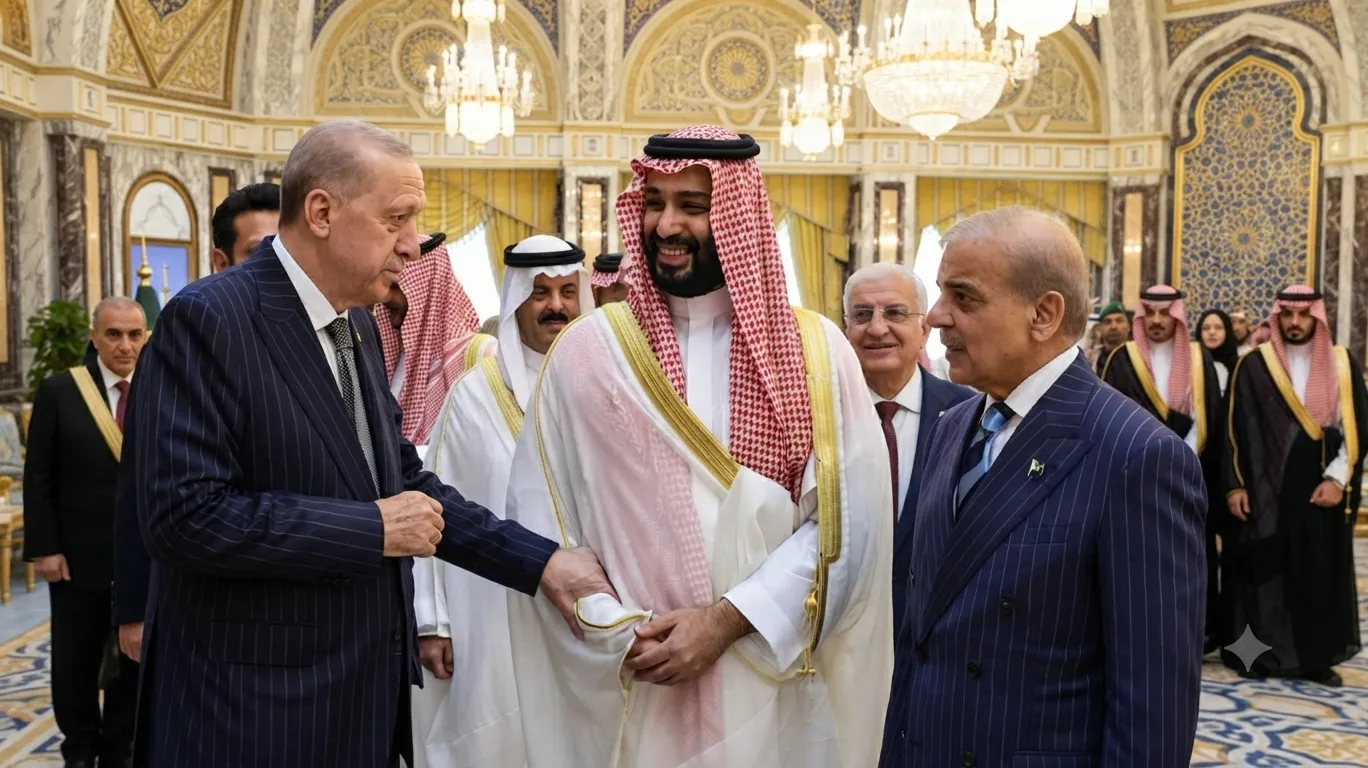
Pakistan, Türkiye and Saudi Arabia are reportedly taking initial steps toward building a broader defence cooperation framework that could eventually involve up to 32 countries, according to Turkish Foreign Minister Hakan Fidan.
The development could represent a significant expansion of defence and security cooperation among countries seeking stronger coordination and greater regional stability.
Initial Steps Toward Wider Defence Cooperation
According to Hakan Fidan, Pakistan, Türkiye and Saudi Arabia have started with careful and practical steps as they explore a wider security cooperation framework.
The emphasis on gradual progress suggests that the participating countries are seeking to develop the proposed structure through coordination, dialogue and mutual understanding rather than attempting to establish a fully developed alliance immediately.
Such an approach could allow participating countries to assess areas of common interest and identify practical opportunities for cooperation.
Potential 32-Nation Framework
The proposed initiative has been described as potentially developing into a 32-nation NATO-style defence alliance.
However, the reference to a NATO-style framework should not necessarily be interpreted as meaning that a new organization would immediately replicate NATO's structure, membership system or institutional arrangements.
Instead, the concept points toward a potentially broader network of countries cooperating on defence, security and strategic issues.
The exact membership, structure, responsibilities and decision-making mechanisms of any future framework would depend on further discussions among participating states.
Pakistan, Türkiye and Saudi Arabia
The three countries already maintain significant diplomatic, economic and defence relationships.
Pakistan and Türkiye have historically maintained close military cooperation, including defence industry collaboration, training and strategic dialogue. Saudi Arabia also maintains longstanding defence and security ties with Pakistan and plays an important role in the wider Muslim world.
Closer coordination among the three countries could therefore provide a foundation for broader regional cooperation.
Focus on Regional Security
One of the central objectives of the proposed framework would be strengthening regional security.
Participating countries could potentially cooperate in areas such as defence preparedness, military training, intelligence coordination, counterterrorism and defence technology.
Joint exercises and defence-industry cooperation could also become important elements of a broader partnership.
However, the specific areas of cooperation would depend on future agreements and negotiations.
Joint Defence Capabilities
A wider defence framework could also create opportunities for participating countries to develop stronger joint capabilities.
Pakistan and Türkiye have already expanded cooperation in areas of defence production and military technology, while Saudi Arabia has been pursuing greater investment and development in its domestic defence sector.
Closer collaboration could potentially encourage technology partnerships, joint production projects, training programs and increased defence-industrial cooperation.
Such initiatives could also create economic opportunities for participating countries by supporting local manufacturing and technology development.
Importance of Gradual Progress
Hakan Fidan emphasized the importance of moving forward gradually and maintaining close coordination among participating countries.
This approach is particularly important when dealing with a large group of countries with different security priorities, military capabilities and foreign-policy interests.
Building consensus among a potential group of 32 nations would require extensive diplomatic engagement and agreement on the framework's objectives and responsibilities.
What Could a Wider Alliance Mean?
If successfully developed, a broader defence cooperation framework could influence the regional security landscape.
It could provide participating countries with a platform for closer consultation during security challenges, encourage joint defence initiatives and create stronger connections between military institutions.
The initiative could also increase cooperation among countries in the Middle East, South Asia and other regions.
At the same time, the long-term significance of the proposal will depend on whether additional countries formally participate and what commitments they ultimately make.
A Potential New Chapter in Regional Cooperation
The reported initiative reflects growing efforts by Pakistan, Türkiye and Saudi Arabia to strengthen strategic and defence relations.
For Pakistan, stronger cooperation could provide opportunities for expanded defence-industrial partnerships and strategic coordination. For Türkiye, it could support its broader role in regional diplomacy and defence cooperation. For Saudi Arabia, deeper partnerships could complement its efforts to strengthen national and regional security capabilities.
The potential involvement of additional countries would make the initiative considerably more significant, although many details remain to be clarified.
Conclusion
Pakistan, Türkiye and Saudi Arabia have reportedly begun practical steps toward wider defence cooperation, with Turkish Foreign Minister Hakan Fidan indicating that the framework could eventually involve as many as 32 nations.
For now, the initiative remains at an early stage, and its final structure, membership and scope are yet to be established.
If developed further, however, the proposed framework could become an important platform for defence cooperation, joint capabilities and regional security coordination.
Disclaimer: This article is for informational purposes only and is based on publicly available reports. References to a potential 32-nation or NATO-style framework describe the reported proposal and should not be interpreted as confirmation that such an alliance has already been formally established. The image is AI generated and is used for reference purposes only.