A research team has used advanced subsurface radar technology to scan Turkey's Durupınar formation — a boat-shaped geological feature long associated by some researchers and religious communities with Noah's Ark — reporting the detection of organized underground structures, though the findings remain unconfirmed and are being met with continued skepticism from the broader geological community.
The Site and the Claim
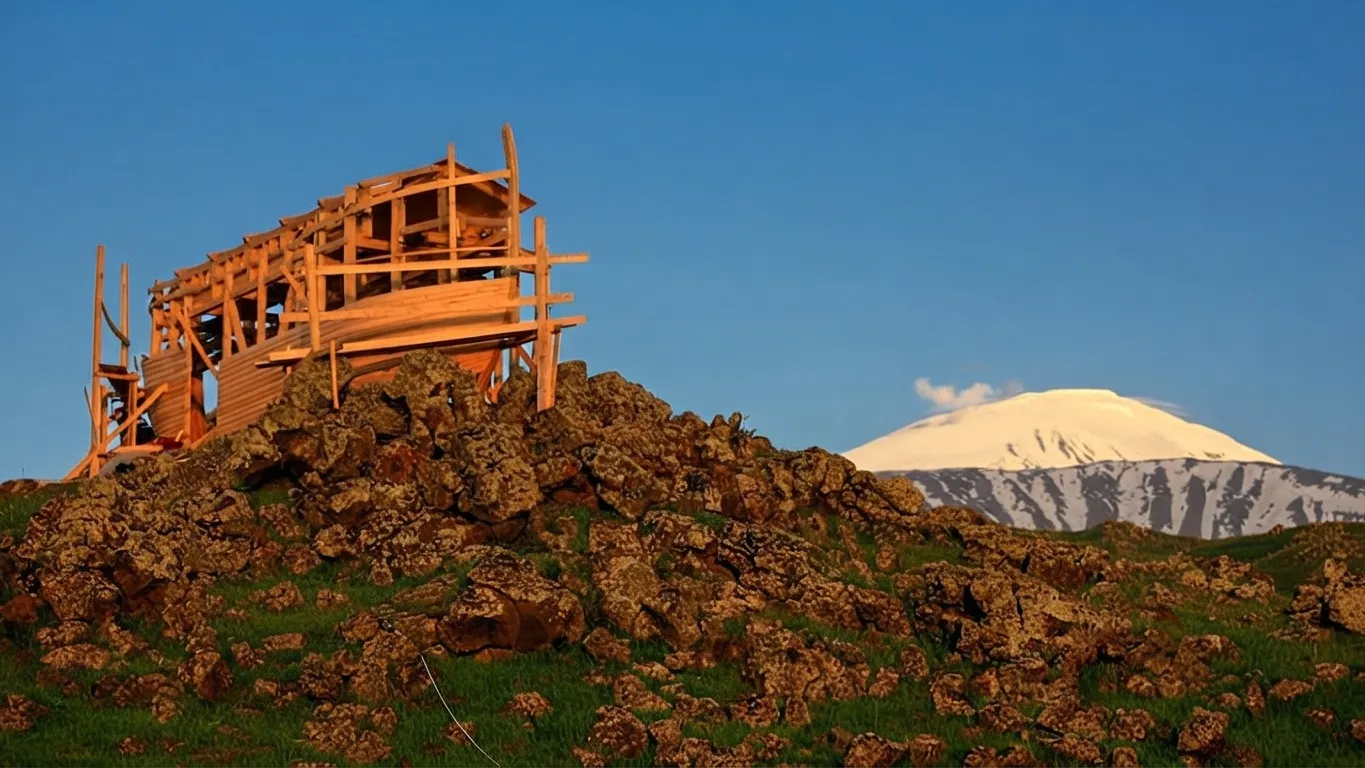
The Durupınar formation is a boat-shaped geological feature located roughly 19 miles (29–30 kilometres) south of Mount Ararat in eastern Turkey, measuring approximately 515 feet (157 metres) in length. The site first drew international attention after being identified in aerial imagery in 1959, and its dimensions have long been noted by some researchers and religious communities as closely matching the description of Noah's Ark given in the Book of Genesis.
The Latest Investigation
The most recent research effort was carried out by Noah's Ark Scans, a California-based research group led by researcher Andrew Jones, in partnership with Dr. Khosrow Bakhtar, a veteran scientist with more than 25 years of experience on U.S. Department of Defense projects and the author of over 200 technical papers. Bakhtar developed and deployed a specialized subsurface imaging system called BakhtarRadar, technology originally developed for U.S. Air Force defense research and also used by agencies including the Army, Navy, Marines, DEA, Border Patrol, and the U.S. Department of State.
The radar deployment, announced in mid-August 2026, represents the latest phase in an investigation that builds on earlier ground-penetrating radar (GPR) surveys of the site, including a 2019 survey.
What the Radar Reportedly Found
According to the research team, the radar scans revealed several notable findings:
- Multiple strong subsurface anomalies and layering beneath the boat-shaped surface, rather than what would be expected from a simple, homogeneous mass of natural rock
- Angular structures detected at depths of up to approximately six metres (20 feet)
- A central corridor and a network of interconnected spaces converging toward the centre of the formation
- These features reportedly arranged across three underground levels, which the team suggests could correspond to a three-story vessel structure
- In deeper data processed so far, no clear bedrock boundary has yet been identified beneath the formation, at depths well below where a shallow rock core would typically be expected
Dr. Bakhtar stated: "We have collected preliminary data at depths well beyond what has already been recovered in the past... We will use BakhtarRadar's unique capability to directly distinguish any still preserved petrified, man-worked timbers from the natural host formation and its varying mineralogy."
Why Skepticism Remains
Despite these reported findings, significant scientific skepticism continues to surround the site and this latest investigation:
1. The prevailing geological consensus Most geologists continue to classify the Durupınar formation as an entirely natural feature — the product of folded rock, mudflow, and erosion processes, rather than a man-made structure.
2. No peer-reviewed publication None of the findings from this latest radar survey have been published in peer-reviewed scientific literature. To date, the claims have been shared only through press statements and press releases, which do not carry the same level of scientific scrutiny and verification as peer-reviewed research.
3. No physical man-made evidence recovered Despite decades of interest in the site, no wood remains, nails, or other man-made materials have ever been extracted from the Durupınar formation, including from a previous 1988 core drilling campaign led by Bayraktutan and Baumgardner, which attempted to drill at four locations without success.
4. Questions about researcher objectivity Critics have also noted that some members of the research team reportedly expressed confidence they had found the Ark even before examining the collected data — a detail that raises questions about the objectivity of the interpretation process.
What Comes Next: Core Drilling
Both the radar findings and the broader research effort are explicitly described as preliminary, with the research team stating that the results are "subject to full processing and interpretation." The next planned phase of investigation is core drilling, which the team intends to use alongside BakhtarRadar's specific capability to attempt to distinguish potential preserved, man-worked timber from the natural surrounding rock and its varying mineral composition. Soil samples have reportedly already been collected from 22 points at the site, as part of the broader investigative process, with further sample collection and drilling surveys planned.
Why This Story Matters
1. A recurring, high-interest topic with genuine scientific and religious significance The possibility of physical evidence connected to Noah's Ark carries significant interest across both scientific and religious communities, given the story's prominence within Abrahamic religious traditions and its potential archaeological and historical significance if verified.
2. Advanced technology applied to a long-debated site The application of defense-grade subsurface radar technology — originally developed for military and government use — to this decades-old geological mystery represents a genuinely more sophisticated technical approach than earlier survey attempts at the site.
3. The importance of distinguishing preliminary claims from confirmed findings This story offers a useful example of the distinction between preliminary, press-released findings and confirmed, peer-reviewed scientific conclusions — a distinction that remains crucial as the investigation continues, particularly given the site's history of previous unconfirmed claims dating back decades.
4. Independent verification remains the deciding factor As with any extraordinary claim, independent scientific research, peer review, and — most critically — physical evidence (such as recovered man-made materials) will be necessary before any credible connection between the Durupınar formation and Noah's Ark can be scientifically established.
Conclusion
The latest radar investigation at Turkey's Durupınar formation has reignited long-standing debate over whether the boat-shaped site could be connected to Noah's Ark, with researchers reporting the detection of organized underground structures using advanced defense-grade subsurface radar technology. However, with most geologists continuing to view the formation as a natural feature, no peer-reviewed findings yet published, and no physical man-made evidence ever recovered from the site, the claim remains firmly in the realm of preliminary and unconfirmed investigation. The planned core drilling phase will offer an important next test of whether these radar-detected anomalies reflect genuine man-made structures or continue to align with the natural geological explanation favored by mainstream science.
Disclaimer: This post is for informational purposes only and is based on publicly available reports. The image referenced in the original social media post is AI generated and is for reference only. This article presents both the research team's claims and the scientific skepticism surrounding them, and does not assert any conclusion regarding the site's origin.