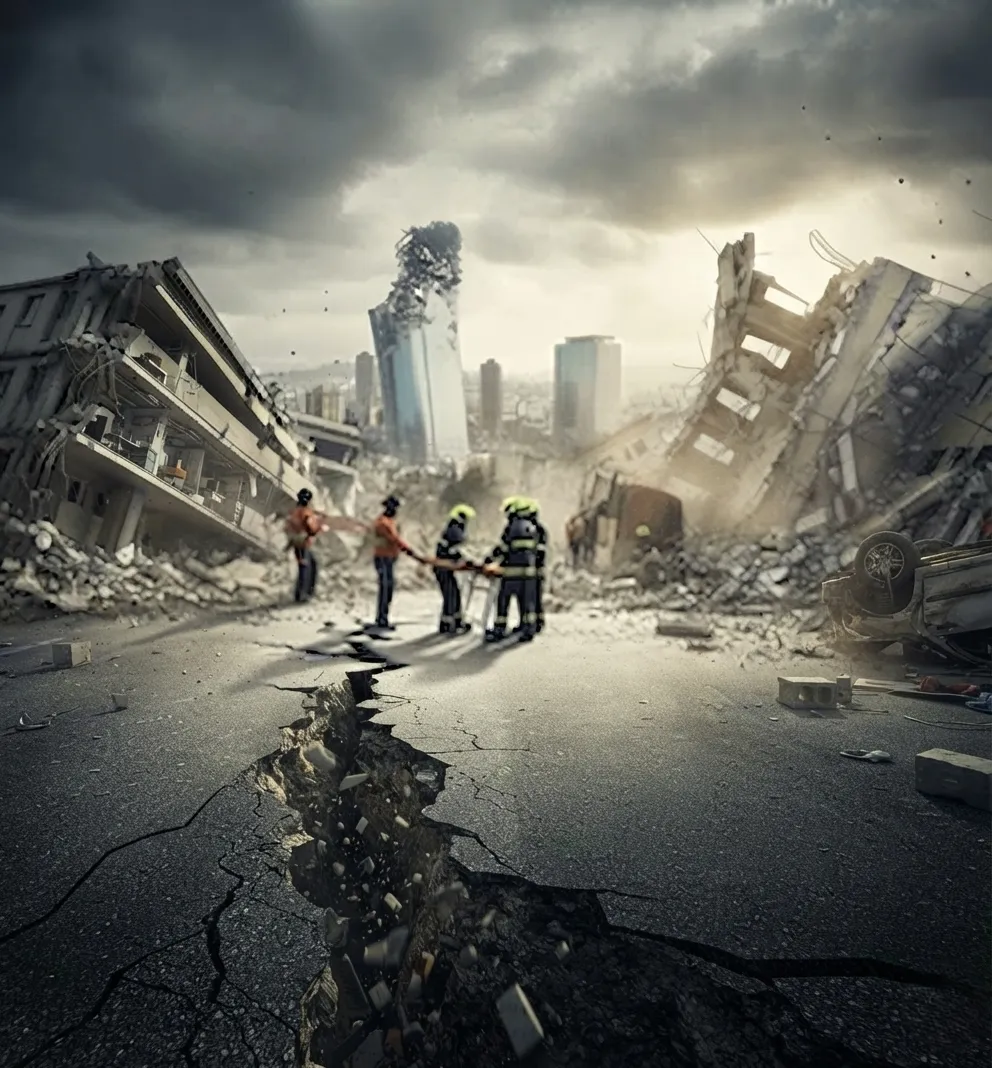
A powerful 7.4-magnitude earthquake struck western Colombia on August 10, devastating parts of the country's coffee-growing region and leaving at least 164 people confirmed dead as rescue teams continue searching collapsed buildings for survivors.
What Happened
The earthquake struck early Monday morning, with its epicenter located near San José del Palmar in western Colombia, roughly 150–250 miles west of the capital, Bogotá, in the Chocó region. According to Colombia's Geological Survey, it was the largest seismic event recorded in the country in decades — and by some assessments, the most powerful earthquake to hit Colombia this century.
The quake occurred at a depth of roughly 103 km along a strike-slip fault in the area where the Nazca, South American and Caribbean tectonic plates interact — a zone known for frequent seismic activity. Shaking was felt as far away as Bogotá, Barranquilla on the coast, and even in neighboring Ecuador and Venezuela, with an estimated 10.5 million people experiencing strong to very strong shaking.
The Hardest-Hit Cities
Several cities across Colombia's mountainous coffee-growing region bore the brunt of the destruction:
Cali — Colombia's third-largest city, home to roughly 2.2 million people, was among the hardest hit, with at least 85 deaths reported there. Dozens of buildings were left leaning precariously or destroyed outright, including the pediatric and neonatal sections of a local hospital, forcing residents into the streets.
Pereira — The capital of Risaralda state reported at least 66 deaths, with entire residential blocks reduced to rubble. Video footage showed the city's airport swaying violently during the quake, with ceiling sections collapsing on travelers sheltering inside. The city's cable car system, a popular form of public transit connecting hillside communities to the city center, was suspended due to structural damage after passengers were evacuated from mid-air cabins.
Manizales — Also located in the coffee-growing region, Manizales saw significant destruction, with local officials reporting that 17 buildings had collapsed and 19 more had partially collapsed. The city's historic neo-Gothic cathedral suffered major structural damage, with one of its towers cracking apart — a particularly striking image of the disaster's toll on the region's cultural heritage.
Chocó — The rural province closest to the earthquake's epicenter reported at least 13 deaths. Much of Chocó is remote, densely forested, and reachable only by boat or plane, complicating rescue and damage assessment efforts in the area.
The Human Toll
As of the latest updates, at least 164 people have been confirmed dead, with hundreds more injured. Authorities have cautioned that the death toll is expected to continue rising as rescue operations progress and previously unreachable or unassessed areas are surveyed, particularly in more remote regions like Chocó.
Emergency teams — including police, soldiers, professional rescue workers, and volunteers — have been working around the clock, using excavators and, in many cases, their bare hands, to search for survivors trapped beneath the rubble of collapsed buildings.
Government and International Response
Colombia's government has declared a state of emergency, mobilizing resources for rescue, relief, and recovery operations across the affected regions. Notably, Colombian President Abelardo De La Espriella — who had only taken office days before the disaster struck — announced that he had personally assumed leadership of the emergency response and traveled to affected areas to oversee recovery efforts directly.
International support has also begun to arrive, with leaders and governments from the United States, elsewhere in South America, Europe, and the Middle East pledging assistance for the ongoing rescue and relief operations. Humanitarian organizations have also mobilized, with groups like Direct Relief monitoring health needs and preparing medical aid for the region, given the well-documented risk that major earthquakes of this magnitude pose to regional health systems through crush injuries, trauma, and overwhelmed hospitals.
A Region No Stranger to Seismic Activity
Colombia's Pacific region sits along the Ring of Fire, the seismically active belt encircling the Pacific Ocean where a large share of the world's earthquakes occur. Geologists note that a similar earthquake struck the same region in 1979, suggesting this is a recurring process tied to stress building within the Nazca tectonic plate, rather than a one-off anomaly.
This earthquake is also being compared in scale to the pair of earthquakes that struck neighboring Venezuela in June, underscoring the broader seismic vulnerability of the region.
Why This Disaster Matters
1. A major humanitarian crisis unfolding in real time With the death toll still rising and search-and-rescue operations ongoing, this remains an active humanitarian emergency, with the coming days likely to be critical for locating survivors still trapped beneath rubble.
2. Damage to critical infrastructure The collapse of hospital sections, transit systems, and residential buildings across multiple cities highlights the widespread strain this earthquake has placed on essential infrastructure and services in the affected region.
3. Loss of cultural heritage The structural damage to Manizales's historic cathedral reflects not only the human toll of the disaster but also the loss of significant cultural and architectural heritage in the affected region.
4. A test for Colombia's newly inaugurated leadership With President De La Espriella having taken office only days before the earthquake struck, the disaster represents an early and significant test of his administration's crisis response capabilities.
Conclusion
The 7.4-magnitude earthquake that struck Colombia on August 10 has left a devastating mark on the country's coffee-growing heartland, with at least 164 confirmed dead and rescue operations ongoing across Cali, Pereira, Manizales, and surrounding areas. As emergency workers continue searching the rubble for survivors and the government coordinates relief efforts under a declared state of emergency, the full scale of the disaster's human and structural toll is still coming into focus.
Disclaimer: This content is for informational purposes only and based on available reports. The image referenced in the original social media post is AI generated and is just for reference.