Chinese company China Harbour Engineering Company (CHEC) has proposed a preliminary cost of $522.34 million for Phase-I of a new deep-water port at Keti Bunder near Karachi, with President Asif Ali Zardari calling for an integrated development strategy alongside strong environmental and community safeguards.
The Proposed Project
The plan, presented directly to President Asif Ali Zardari, outlines the initial phase of a new deep-water port facility at Keti Bunder, located near Karachi. Key features of the proposed Phase-I development include:
- A multi-purpose terminal
- A 500-metre quay — the docking structure where vessels would berth for loading and unloading
- Logistics facilities to support cargo handling and distribution
- Supporting infrastructure more broadly, necessary to operationalize the port facility
The preliminary cost estimate for Phase-I stands at $522.34 million, reflecting the scale of investment required just for this initial stage of the broader port development.
President Zardari's Response: An Integrated Development Approach
Rather than treating the port as a standalone infrastructure project, President Zardari specifically called for an integrated development strategy, encompassing several additional dimensions:
1. Road connectivity Ensuring the new port is properly connected to the broader road network, essential for enabling the efficient movement of goods to and from the facility.
2. Reliable power supply Highlighting the need for dependable electricity infrastructure to support port operations.
3. Water supply Emphasizing the importance of reliable water infrastructure as part of the broader development package.
4. Industrial infrastructure Calling for supporting industrial infrastructure, suggesting a vision for the port to serve as an anchor for broader industrial and economic activity in the surrounding area, rather than functioning purely as an isolated shipping facility.
Environmental and Community Concerns
Notably, President Zardari also placed specific emphasis on environmental protection and the wellbeing of local communities:
1. Protecting the Indus Delta ecosystem The President specifically highlighted the need to protect the fragile Indus Delta ecosystem, an ecologically significant and sensitive region, reflecting an awareness of the environmental risks that large-scale port and industrial development can pose to such areas.
2. Safeguarding local fishing communities Zardari also stressed the importance of safeguarding local fishing communities, acknowledging that communities dependent on fishing in the area could be directly affected by a major port development project, and that their interests and livelihoods should be considered as part of the project's planning.
Why This Emphasis Matters
The explicit inclusion of environmental and community safeguards alongside the infrastructure and economic elements of the proposal reflects an effort to position this project within a broader, more holistic development framework — one that considers not just the port's economic and logistical value, but also its potential environmental and social impact on the surrounding region and its existing communities.
Why This Development Matters
1. Strengthening Pakistan's maritime infrastructure A new deep-water port has the potential to meaningfully strengthen Pakistan's overall maritime network, adding capacity alongside the country's existing port facilities and potentially easing pressure on established ports.
2. Enhancing trade connectivity and logistics capacity By expanding port infrastructure, this project could contribute to improved trade connectivity, supporting more efficient import and export activity, and strengthening Pakistan's broader logistics capacity.
3. Chinese investment in Pakistani infrastructure CHEC's involvement reflects continued Chinese engagement in major Pakistani infrastructure projects, an area that has seen significant investment and collaboration in recent years, particularly within the broader context of China-Pakistan economic cooperation.
4. A model for integrated, responsible infrastructure development President Zardari's emphasis on connectivity, utilities, industrial infrastructure, environmental protection, and community safeguards together reflects an approach that seeks to balance economic development ambitions with environmental and social responsibility — an increasingly important consideration for major infrastructure projects globally.
What Comes Next
As this remains a preliminary proposal, with only Phase-I's estimated cost outlined so far, further details are likely to emerge regarding financing arrangements, project timelines, environmental impact assessments, and the specific mechanisms through which community and ecological safeguards will be implemented. The project's progression will likely depend on how these various integrated development considerations — infrastructure, environmental protection, and community impact — are addressed in subsequent planning stages.
Conclusion
CHEC's proposed $522.34 million Phase-I plan for a new deep-water port at Keti Bunder represents a significant potential addition to Pakistan's maritime infrastructure, with President Zardari's call for an integrated development strategy — spanning connectivity, utilities, industrial infrastructure, and crucially, environmental and community protection — signaling an approach aimed at ensuring the project's benefits are pursued responsibly. If realized, this deep-water port could meaningfully strengthen Pakistan's maritime network, trade connectivity, and logistics capacity, while its ultimate success will likely depend on how effectively these broader development and protection considerations are integrated into the project's execution.
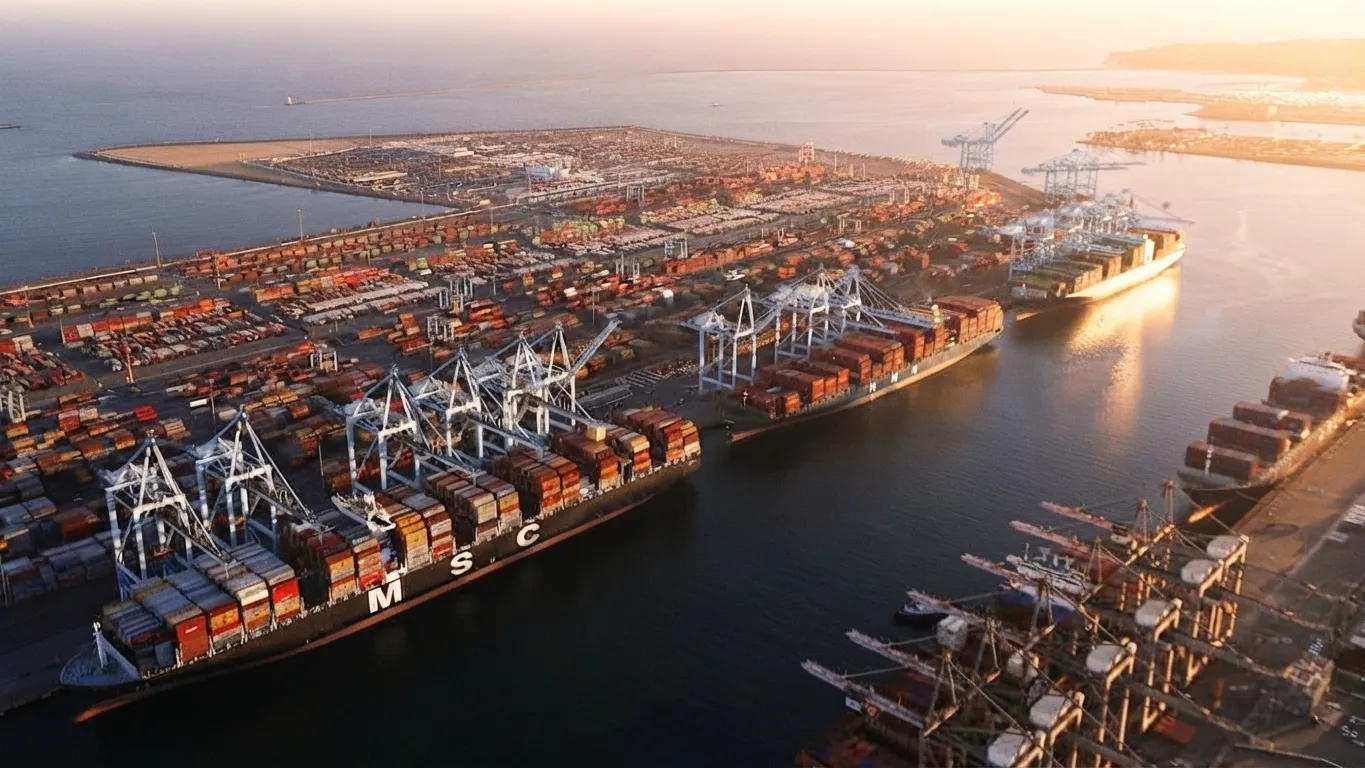
Disclaimer: This content is informational purposes only and based on available reports. The image referenced in the original social media post is AI generated and is just for reference. This article does not constitute financial or investment advice.