RoboCup 2026 is underway in Incheon, South Korea, bringing together robotics researchers, students, universities, and technology teams from around the world.
Often described as one of the world’s largest robotics and artificial intelligence competitions, RoboCup features multiple categories, including robot football, rescue technology, home-service robotics, industrial robotics, and youth competitions.
One of the event’s most watched categories is robot football, where autonomous robots compete in matches designed to test real-world AI and robotics capabilities.
Fully Autonomous Humanoid Robots
In RoboCup’s humanoid football competitions, robots are designed to operate without direct remote control.
They use onboard systems to perform tasks such as:
- Detecting the ball
- Recognising teammates and opponents
- Understanding the field
- Maintaining balance
- Walking, running, and kicking
- Making decisions during matches
- Coordinating with other robots
This makes robot football a challenging test for artificial intelligence, machine vision, movement control, and multi-robot teamwork.
RoboCup’s 2050 Goal
RoboCup was established in 1997 with a long-term research goal: to develop a fully autonomous robot football team capable of defeating the human FIFA World Cup champions by 2050.
This goal is not a guarantee or a near-term forecast. Instead, it provides researchers with a shared challenge that encourages progress in robotics, AI, perception, decision-making, and physical movement.
Why Robot Football Matters
Robot football may look like a sport, but it also helps researchers develop technologies with wider uses.
The same abilities required for robots to play football can support future work in:
- Disaster response
- Healthcare assistance
- Warehouse automation
- Industrial robotics
- Autonomous mobility
- Home-service robots
- Human-robot collaboration
For a robot to play football successfully, it must make fast decisions in an unpredictable environment. These are similar challenges faced by robots working in real-world settings.
Human Athletes Remain Ahead
Human football players remain far ahead of robots in athletic performance, creativity, endurance, adaptability, and tactical awareness.
However, RoboCup shows that humanoid robots are becoming more capable in areas such as balance, visual perception, movement, and coordination.
The event highlights how physical AI is moving beyond screens and software into machines that can understand and act in the real world.
Final Thoughts
RoboCup 2026 in South Korea offers a glimpse into the future of robotics and artificial intelligence.
While robot teams are not ready to challenge human football champions today, the competition demonstrates how rapidly autonomous systems are evolving. The technology being tested on the football field could eventually help shape industries, public services, and everyday life.
Disclaimer
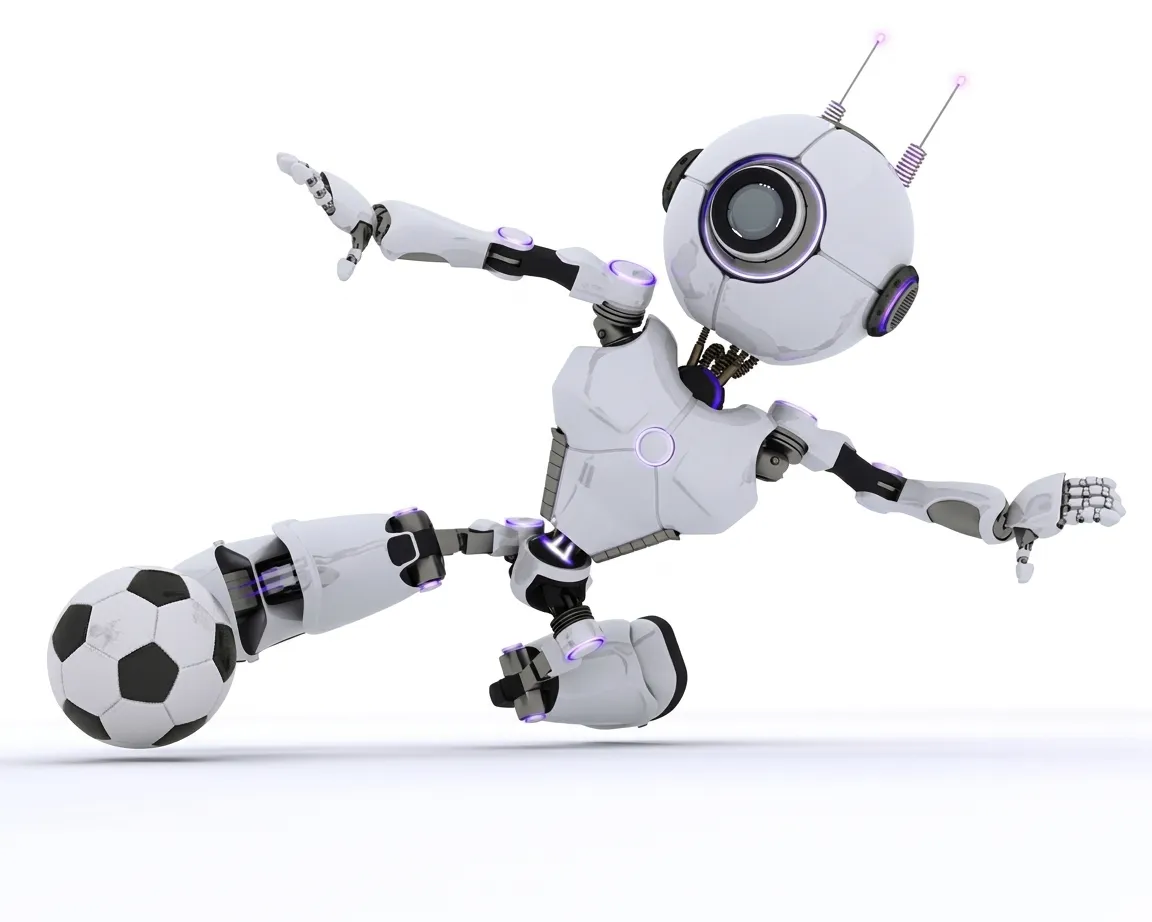
This article is for informational purposes only and is based on publicly available reports. The accompanying image is AI generated and is for illustrative purposes only. Event schedules, competition details, results, and technology claims may change as official updates become available.